Hansik is traditional Korean cuisine. A typical Korean meal is built around three roles: a bowl of rice, a hot soup or stew (jjigae), and a set of side dishes (banchan). Understanding this structure is the simplest way to see how Koreans eat day to day.
Three dishes cover that whole structure: Buldak Kimchi Jjigae for the soup, Buldak Jeyuk Bokkeum as the main dish, and Buldak Bibimbap as a complete one bowl meal.
One Buldak Sauce can stand in for Korean chili paste, so you can build a full Hansik meal at home without mixing several seasonings.
When American readers hear the term Korean food, they often picture K-BBQ, fried chicken, or a late night bowl of ramen. Those dishes are popular around the world, but they do not show how Korean people actually eat from day to day. The everyday Korean meal follows a simpler, more structured idea. It is built around a main bowl of rice, supported by a warm soup or stew, and surrounded by a set of side dishes. When those three parts come together, you have a complete meal.
As K-culture keeps growing, more people are typing what is Hansik into search. Yet even with plenty of results, it is hard to find a guide that clearly lays out how a real Korean meal is put together. Hansik is not only stews or fermented cabbage. It is the structure of the meal itself: plain rice as a neutral base, with the soup and side dishes carrying the flavor, the broth, and the variety.
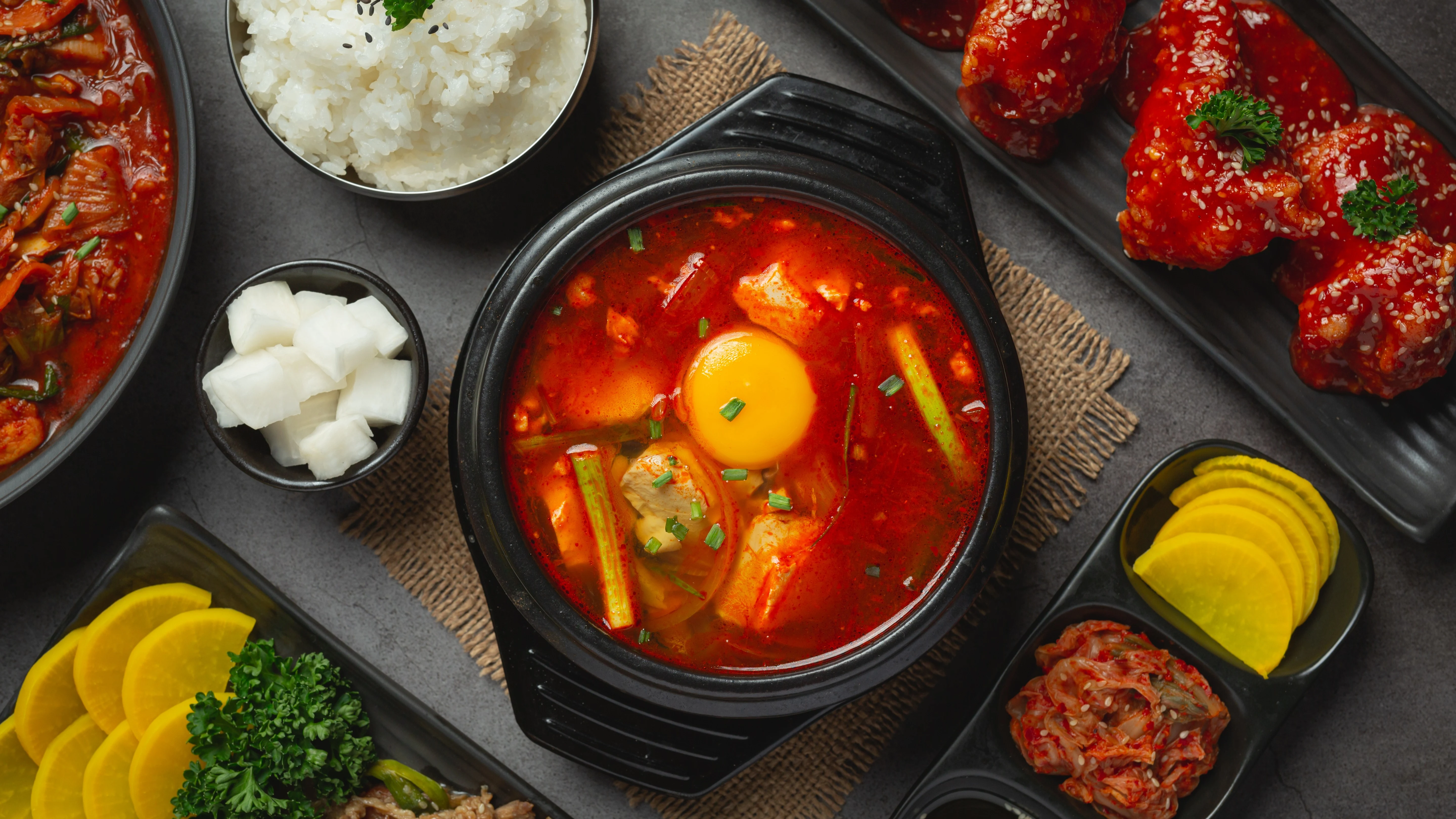
The useful part is that recreating this kind of meal at home does not call for a pantry of rare spices or years of training. Buldak Sauce works as an all-in-one base because it combines chili heat, the savory depth of soy sauce, and a round note of sweetness. You can use it to build a stew, season a meat dish, or finish a mixed rice bowl. This guide shows how to use one jar to make the three core parts of a Korean meal.
Understanding Hansik and How Buldak Sauce Fits
To get these recipes right, it helps to understand how a Korean meal is structured and why Buldak Sauce fits Korean cooking so naturally.
What Is Hansik? How a Korean Meal Is Structured
Hansik is traditional Korean cuisine, built around a bowl of rice, a soup or stew (jjigae), and a set of side dishes (banchan). The defining trait is that a meal is rarely a single dish. Unlike a one plate American meal, such as a steak with a side of mashed potatoes, a Korean meal relies on several separate bowls, each one playing a part.
Rice (Bap): The center of the meal. Rice is the plain, steady base, and every other dish is seasoned to be eaten with a spoonful of it.
Soup and Stew (Guk and Jjigae): Something liquid is needed to go with the rice. A guk (soup) is lighter and more brothy, while a jjigae (stew) is thicker, more heavily seasoned, and packed with solid ingredients like meat, tofu, and vegetables. The jjigae is the savory liquid anchor of the meal.
Side Dishes (Banchan): These surround the rice. They range from fermented kimchi and seasoned vegetables to heartier protein dishes like stir fried pork. The meat side dishes set how rich the meal feels.
When rice, stew, and side dishes come together, you have a complete Hansik meal. So learning one stew, one meat side, and one rice bowl is enough to build the whole format at home.
Why Buldak Sauce Matches Korean Seasoning
Most classic Korean spicy dishes lean on the same combination: chili heat, soy sauce, garlic, and a little sweetness. Whether it is a gochujang marinade, a spicy pork stir fry, or a red stew, that base stays consistent.
Chili heat: the clear, defining spice of Korean cooking.
Soy sauce umami: a savory saltiness that suits meat, vegetables, and broth.
A little sweetness: it softens the edge of the spice and creates the sweet and spicy balance Korean food is known for.
So you do not need to learn a Buldak Sauce recipe from scratch. You use it wherever a Korean chili paste would normally go, which brings a consistent Korean flavor across a full Hansik meal without mixing several seasonings yourself.
Ready to set your own Hansik table? Grab a Buldak Sauce and cook all three recipes from one bottle 🔥
Get Buldak Sauce on Amazon and bring real Korean heat to your kitchen 🛒
3 Hansik Recipes Built with Buldak
These three recipes cover the core of a traditional Korean meal: Kimchi Jjigae for the stew, Jeyuk Bokkeum for the main side, and Bibimbap for a complete one bowl meal. All three use one jar of Buldak Sauce.
Recipe 1: Buldak Kimchi Jjigae
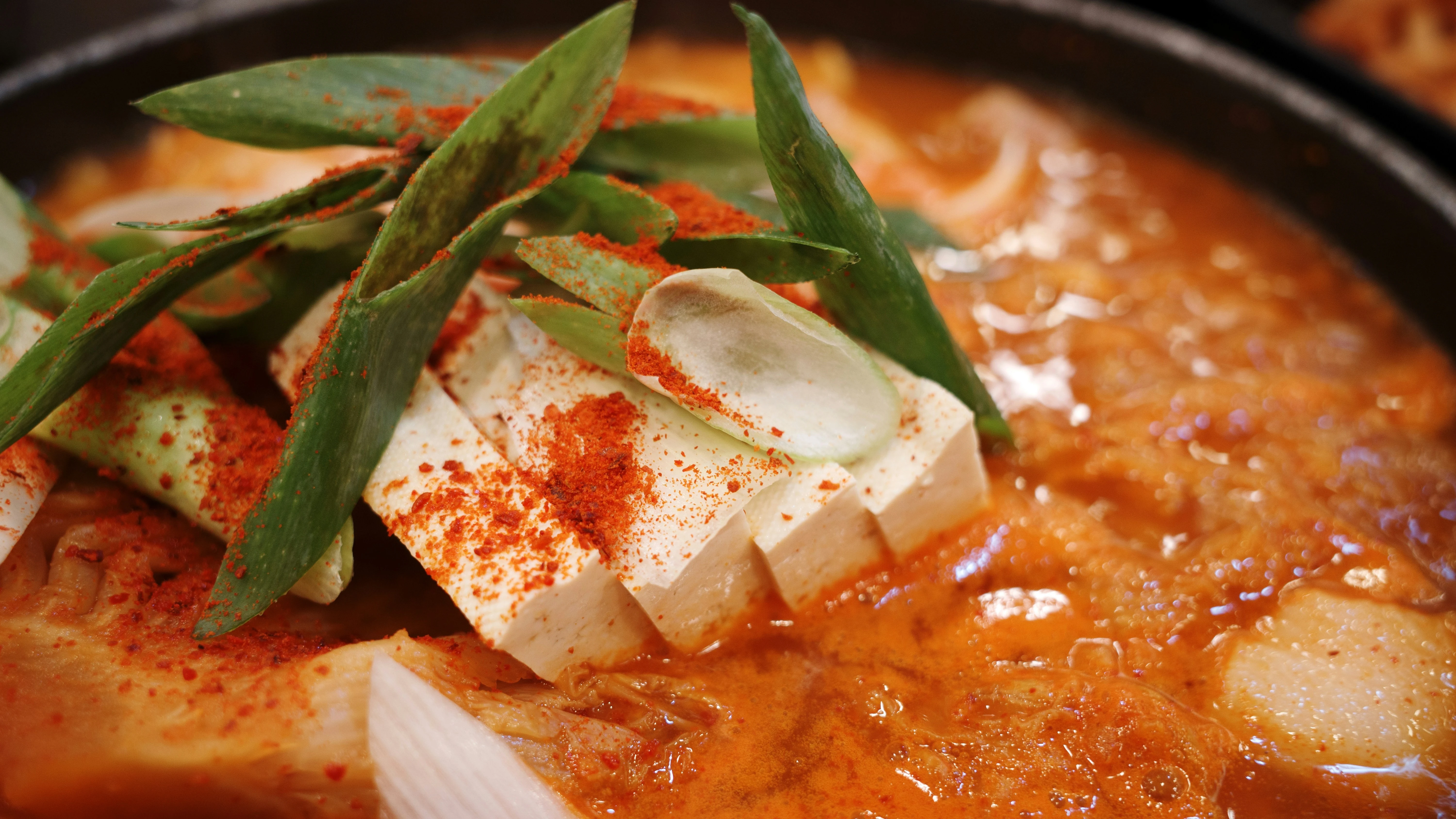
The jjigae is the anchor of the meal, and it brings the deep, savory broth a Korean meal needs. Kimchi Jjigae is the most common everyday version in Korea. Using a Buldak Sauce recipe with well-fermented kimchi means you can skip extra chili flakes and still get a rich, spicy broth that pairs with a big bowl of white rice.
Ingredients: 2 cups well-fermented (sour) kimchi, 200g pork belly or pork shoulder (sliced), 1/2 block of firm tofu, 1/2 onion (sliced), 1 scallion (chopped), 1 tablespoon minced garlic, 2 to 3 tablespoons Buldak Sauce, 3 tablespoons kimchi juice (from the jar), 500ml water or anchovy broth, cooking oil.
Recipe Details: Prep Time: 10 mins | Total Time: 30 mins | Servings: 2 portions.
Macros (Per Serving): Protein: ~22g | Carbs: ~12g | Fat: ~24g.
Instructions:
Heat a little oil in a medium pot and cook the pork over medium heat until the outside browns.
Add the sour kimchi and minced garlic and sauté for 3 minutes to mellow the sharpness of the kimchi.
Pour in the water (or broth) and the reserved kimchi juice, then stir in 2 tablespoons of Buldak Sauce.
Bring it to a boil, lower the heat to medium low, and simmer for 15 minutes to soften the kimchi and deepen the broth.
Add the tofu, onion, and scallions, and simmer for a final 5 minutes.
Taste, and add the last tablespoon of sauce if you want more heat.
Pro Tip: The kimchi needs to be well fermented and sour. Fresh kimchi makes a flat, bland stew. Start with 2 tablespoons of sauce and adjust at the end, which is the easiest way to control the heat.
Flavor Profile: The fermented depth of the kimchi blends with the heat of the sauce, while the fatty pork and soft tofu round it out. It is an easy first jjigae for anyone new to Hansik stews.
Recipe 2: Buldak Jeyuk Bokkeum
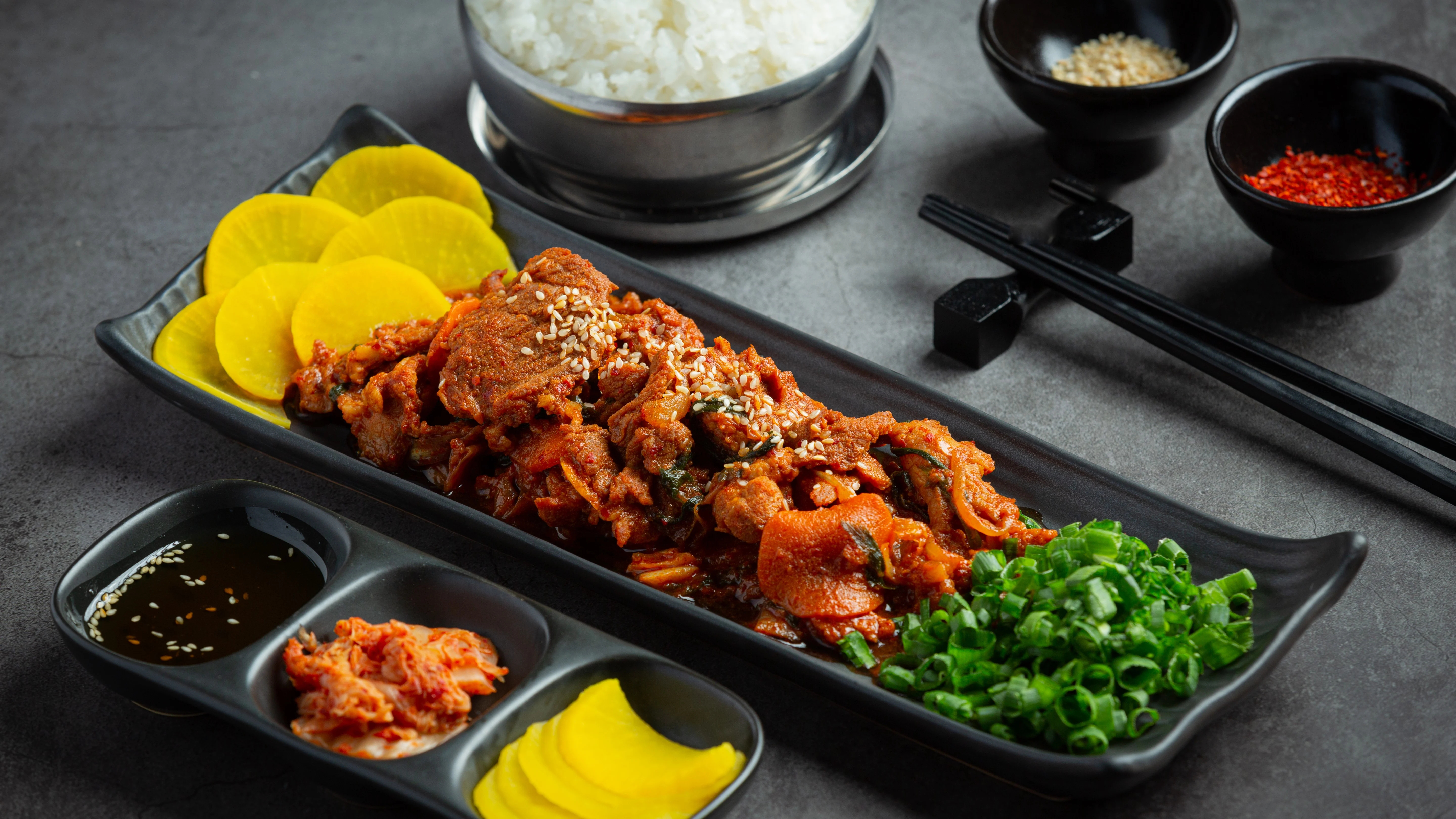 Jeyuk Bokkeum is a Korean spicy pork stir fry and one of the most common main side dishes in Korean restaurants and home lunch boxes. Mixing Buldak Sauce with soy sauce and sugar gives you a glossy, sticky marinade that caramelizes as it cooks, without traditional gochujang.
Ingredients: 300g pork shoulder or pork belly (thinly sliced), 1/2 onion (sliced), 1 scallion (chopped), 2 large cabbage leaves (chopped), 3 tablespoons Buldak Sauce, 1 tablespoon soy sauce, 1 tablespoon sugar, 1 tablespoon minced garlic, 1 teaspoon sesame oil, cooking oil, toasted sesame seeds.
Recipe Details: Prep Time: 15 mins (marinating) | Total Time: 30 mins | Servings: 2 portions. Macros (Per Serving): Protein: ~28g | Carbs: ~16g | Fat: ~26g.
Instructions:
In a large bowl, combine the Buldak Sauce, soy sauce, sugar, and minced garlic into a sticky marinade.
Add the thinly sliced pork and toss to coat every piece. Marinate for 15 to 30 minutes.
Heat a large skillet over high heat with a little oil, add the pork, and stir fry quickly until browned.
Just before the meat finishes, add the onion, cabbage, and scallions.
Stir fry until the vegetables soften slightly but keep some crunch.
Turn off the heat, drizzle with sesame oil, and garnish with sesame seeds.
Pro Tip: Keep the heat high. Cooking the meat fast keeps it from releasing too much liquid, so the glaze clings to the pork instead of turning into a sauce.
Flavor Profile: The sweet and spicy glaze cooks into the pork for a rich, full bite. Wrapping the Jeyuk Bokkeum in fresh lettuce adds a cool, crisp contrast to the heavy meat.
Recipe 3: Buldak Bibimbap
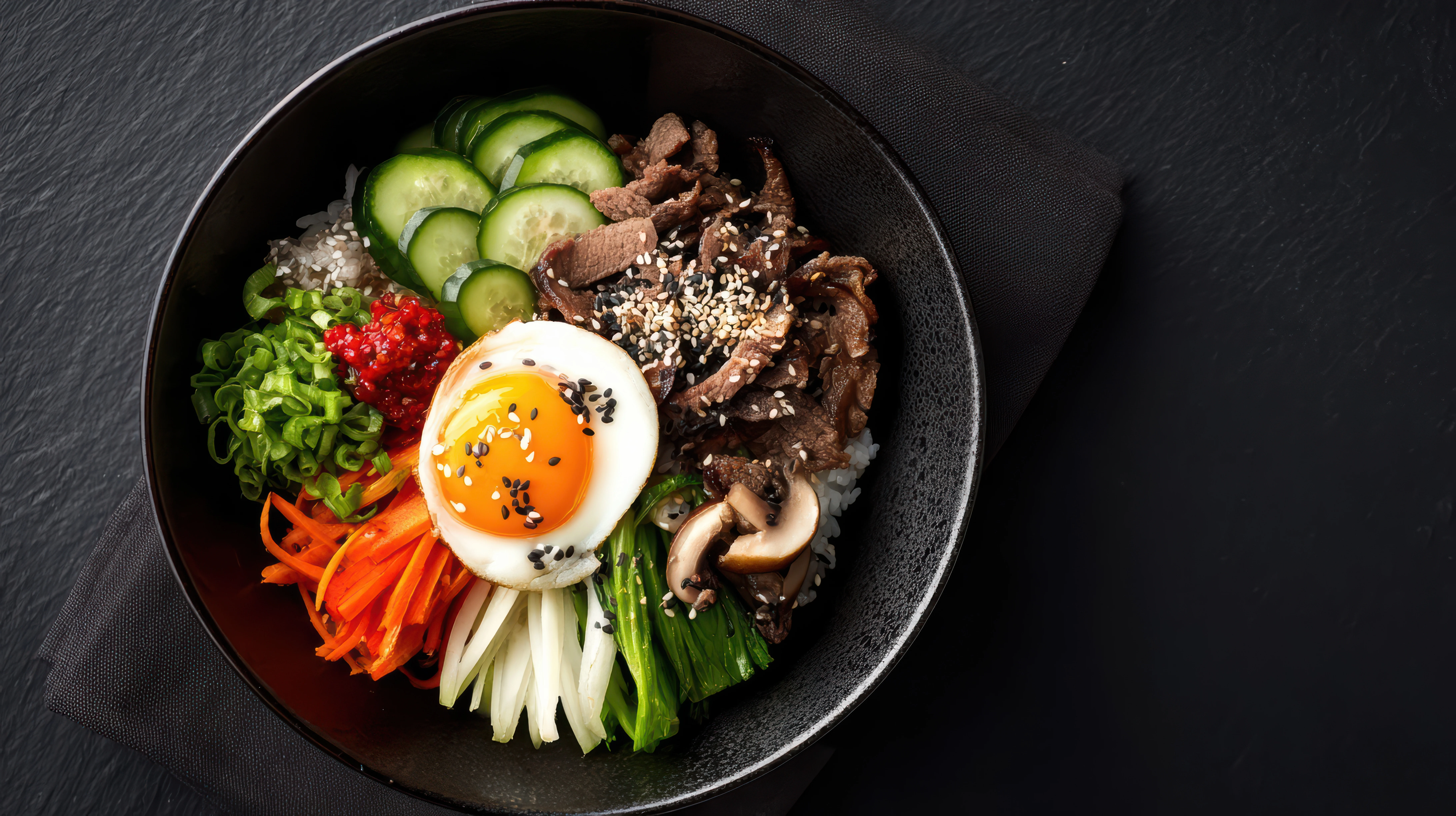
If you look up what Korean Bibimbap is, you will find it is the classic all-in-one meal: warm rice topped with seasoned vegetables, some protein, and sauce. It shows the core idea of Hansik in a single bowl. Swapping the usual gochujang for a Buldak Sauce recipe gives this familiar dish a sharper, spicier edge.
Ingredients: 2 bowls of warm cooked rice, 100g fresh spinach, 1/2 carrot (julienned), 1/2 zucchini (julienned), 100g soybean sprouts, 2 eggs, 2 to 3 tablespoons Buldak Sauce, 1 tablespoon sesame oil, toasted sesame seeds, roasted seaweed flakes, salt.
Recipe Details: Prep Time: 20 mins | Total Time: 30 mins | Servings: 2 portions.
Macros (Per Serving): Protein: ~16g | Carbs: ~72g | Fat: ~18g.
Instructions:
Blanch the spinach briefly, squeeze out the water, and season lightly with salt and a drop of sesame oil.
Blanch the soybean sprouts.
In a skillet, stir fry the carrot and zucchini separately with a pinch of salt.
Fry the eggs sunny side up, keeping the yolks runny.
Place the warm rice in two wide bowls.
Arrange the vegetables in a colorful ring over the rice and set the fried egg in the center.
Drizzle the Buldak Sauce and sesame oil over the top.
Garnish with seaweed flakes and sesame seeds.
Mix everything together well right before eating.
Pro Tip: Mixing the sauce with a generous pour of sesame oil creates an aromatic coating that ties the rice and vegetables together.
Flavor Profile: The point of what is Korean Bibimbap is the mix. The runny yolk, the crisp vegetables, the nutty sesame oil, and the heat of the sauce come together in one balanced spoonful.
Order Buldak Carbonara Sauce on Amazon for a smooth, rich take on Buldak at home 🛒
Build a Full Hansik Meal with One Sauce
A complete Hansik meal needs three parts working together: a stew, a main side, and a rice dish. These three recipes fill each role, so one jar of Buldak Sauce covers the whole meal.
| Role | Dish | What it brings |
| The stew (jjigae) | Buldak Kimchi Jjigae | The warm, savory broth |
| The main side | Buldak Jeyuk Bokkeum | The rich, meaty dish |
| The rice bowl | Buldak Bibimbap | A complete bowl meal on its own |
Start with the stew: The jjigae sits in the middle for everyone to share, so it sets the tone for the meal. Kimchi and tofu let you stretch the pot for more people.
Add a meaty side: Jeyuk Bokkeum brings the rich, savory weight that makes a bowl of rice disappear. Serve it with fresh leaf wraps for contrast.
Keep it to one bowl: When you want the whole meal in a single dish, Bibimbap layers rice, vegetables, and egg with the sauce mixed through.
Always with plain rice: Each dish is seasoned to be eaten with a warm bowl of plain white rice, which carries the heat of the sauce.
Practical Guide: When to Serve Hansik with Buldak
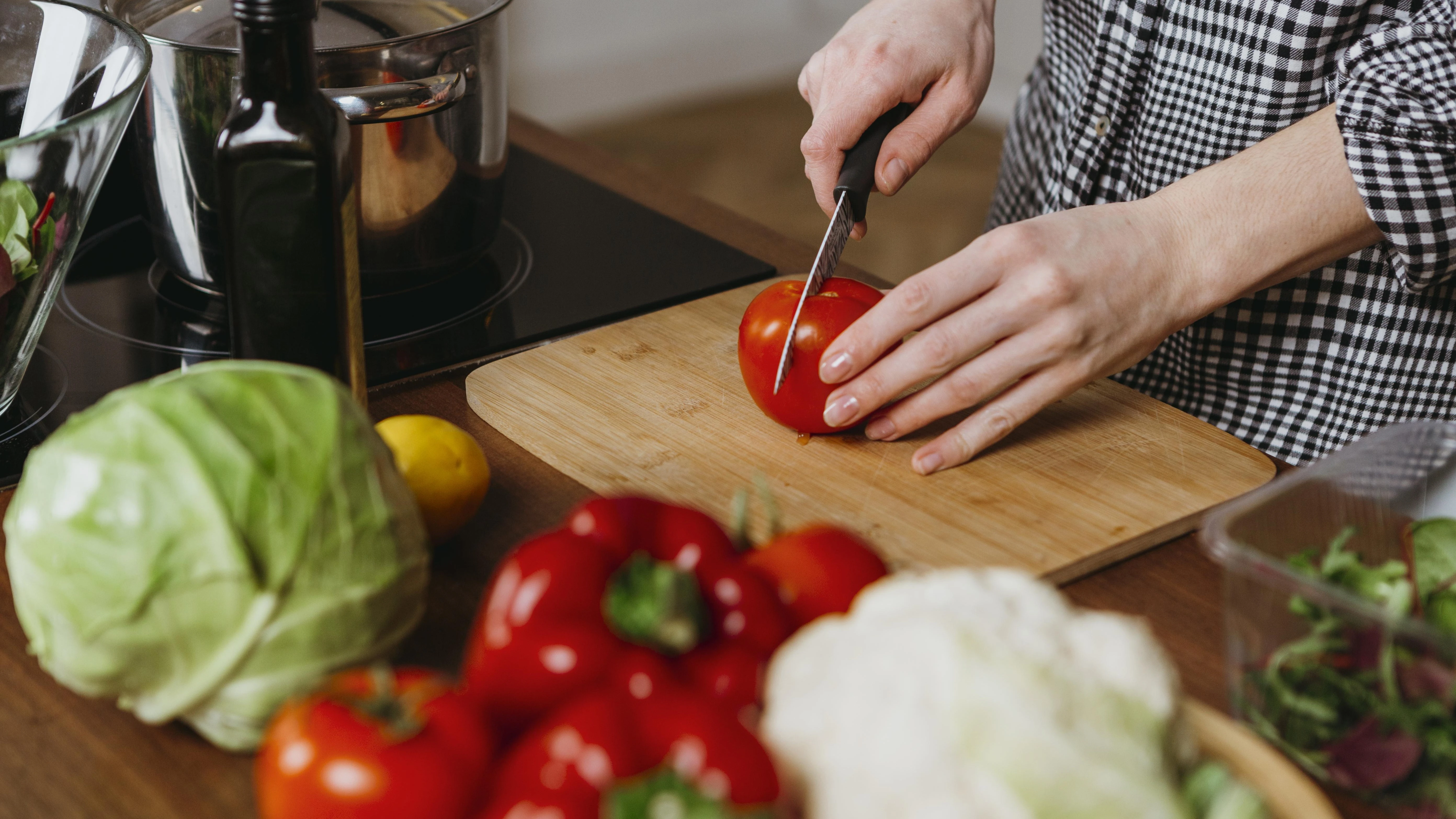 The best dish depends on the moment: pick Kimchi Jjigae for a shared dinner, Jeyuk Bokkeum for a fast weeknight meal, and Bibimbap for using up what is in the fridge.
Kimchi Jjigae (A Cold Night Family Dinner): As a warm, shared main dish, it sits in the middle of the table for everyone. More tofu and kimchi fill out the pot.
Jeyuk Bokkeum (A Quick Weeknight Dinner): The marinated meat cooks in minutes, which makes it a strong choice on a busy night. Serve it with fresh leaf wraps for a hands on meal.
Bibimbap (Clearing Out the Refrigerator): It takes almost any vegetable or protein, so it is a smart way to use up leftovers. The soft egg yolk rounds out the heat of the sauce.
FAQ: Hansik with Buldak Sauce
Q. What does the term Hansik mean?
A: Hansik is traditional Korean cuisine. It is not only a label for spicy or fermented food. It describes the structure of the meal: a bowl of rice as the anchor, supported by a soup or jjigae and a set of side dishes.
Q. What are some famous spicy Korean dishes I can make at home?
A: Kimchi Jjigae, Jeyuk Bokkeum, and Bibimbap are among the most popular and approachable. Because they share a chili and seasoning base, one Buldak Sauce recipe lets you make all three.
Q. What is the difference between a soup (guk) and a jjigae?
A: A guk (soup) has more broth than solids and lighter seasoning. A jjigae (stew) is thicker, full of solid ingredients like meat and tofu, and more strongly seasoned. The jjigae is the main savory dish eaten with rice.
Q. What makes Jeyuk Bokkeum so popular?
A: Jeyuk Bokkeum is a Korean spicy pork stir fry and a go to main side dish. It is known for its sweet, savory, and spicy glaze. Using Buldak Sauce skips the mixing and gives you that flavor quickly.
Q. Can Korean Bibimbap be made with Buldak Sauce?
A: When people ask what is Korean Bibimbap, the traditional answer uses gochujang. Swapping in a Buldak Sauce recipe is a fair twist that gives the rice and vegetable bowl a sharper, bolder kick, a simple modern take on the classic.
Q. What is the easiest Korean dish for beginners?
A: Bibimbap is the easiest place to start. It needs almost no cooking skill. You lay the cooked vegetables and egg over rice, drizzle the sauce and sesame oil, and mix. It is a low stress way into Hansik.
Hansik is not a random set of spicy recipes. It is a balanced structure where plain rice, a rich broth, and savory side dishes share the meal. The warm broth of the Kimchi jjigae, the bold meat of the Jeyuk Bokkeum, and the mix of the Bibimbap show the core of this tradition.
You do not need a dozen spice blends or hard to find ingredients. One jar of Buldak Sauce gives you a consistent Korean flavor base that works in stews, stir fries, and mixed bowls. The next time you cook, use Buldak Sauce as more than a noodle seasoning and build a full Korean meal at home.
Explore the full Buldak Sauce lineup and find the heat level that fits your Korean cooking ⚡