
Quick Summary
Korean meals come with an array of free side dishes called banchan—and Korean marinated eggs are the viral star that took the internet by storm. This guide shows you how to make them with Buldak sauce, plus other easy banchan hacks.
Perfect for: Anyone who wants to build a Korean-style table at home
The Magic: Jammy eggs + Buldak sauce = viral-worthy side dish in 6 hours
Bonus Recipes: Buldak tuna, spicy potatoes, and sausage stir-fry
The first thing that shocks most people about a Korean meal? All the Korean side dishes that show up before the main course arrives. Small bowls packed with different flavors fill the whole table. It's always impressive. Rice and soup sit in the center, joined by six, ten, or even dozens of side dishes. This setup is totally unique to Korea.
Discover authentic Buldak sauces at Buldak.com
🌶 Find Buldak Sauce on Amazon and add a bold, spicy twist to your table today.
1. A Table Full of Flavor: Korea's Side Dish Culture
The first thing that shocks most people about a Korean meal? All the Korean side dishes that show up before the main course arrives. Small bowls packed with different flavors fill the whole table. It's a sight that never gets old. Rice and soup sit in the center, joined by six, ten, or even dozens of side dishes. This is unique to Korean dining.
1) Rice, Soup, and a Whole Lineup of Sides
Korean meals are built for balance. Rice covers carbs. Soup adds hydration and salt. And the banchan menu is filled with fiber and protein. What surprises most visitors is that side dishes aren't optional — they're standard.
In Korea, rice is the main event. Soup and side dishes surround it, giving you a new flavor with every bite. The same bowl of rice tastes different each time. The combination changes based on who you're eating with, which makes every meal feel fresh. Plus, all those colorful dishes make the table pop.
This isn't just about eating. It's the wisdom of past generations who aimed for a perfectly balanced meal — in both nutrition and looks.
2) The Best Part? It's All Free — and Unlimited!
Here's the best part that blows people's minds. All these Korean side dishes are free. You didn't order them, but they show up anyway. And when you finish, you can get refills — no extra charge. In most countries, every side costs extra. But in Korea, you order one main dish and a parade of banchan follows. Sometimes the sides hit your table the second you sit down. This comes from Korea's "jeong" culture — a spirit of sharing that lives on even in restaurants.
2. The Korean Side Dish That Took Over the Internet: Marinated Eggs
Korean tables have tons of Korean side dishes. But one in particular blew up overseas fast. That's Korean marinated eggs — soft-boiled eggs soaked in a savory soy sauce mix.
1) How Marinated Eggs Went Viral
It started when a U.S. rapper posted a video of himself eating spicy Korean ramen with marinated eggs on the side. The clip spread like wildfire. People loved seeing how a Korean side dish could pair so well with so many foods.
Korean marinated eggs have been a home staple in Korea for ages. Making banchan can be a lot of work. But one or two solid dishes can make your whole table feel complete. Korean marinated eggs are perfect for this. Make a batch once, and you can eat them for days. That fits right into our busy lives.
Put them on rice. Drop them on ramen. Mash them on toast. Each way gives a totally different vibe. If you use less seasoning, Korean marinated eggs taste great on their own too.
2) Great Looks, Easy Prep
Old-school Korean braised dishes take hours of slow-cooking meat and veggies in soy sauce. But Korean marinated eggs? Just mix soy sauce, water, and sugar — then drop in your soft-boiled eggs. That's it. The dark soy base with bright green scallions, red chili, and golden yolk makes it pop on any plate.
A slightly cooked yolk is called a "jammy egg." Cut one in half with chopsticks and watch the yolk ooze out like jam. It looks amazing. On camera? Even better.
3. Level Up: Add Buldak to Your Eggs

Among all the marinated egg recipes out there, one stands out — the Buldak version. Picture this: a jammy egg split in half on spicy ramen. Red buldak sauce dripping over the golden yolk. The look is amazing. That's why "Buldak marinated eggs" have become a must-try recipe. This combo of classic side dish and bold spice is popular in Korea and around the world.
1) How to make Korean marinated eggs with Buldak sauce?
If you're wondering how to make Korean marinated eggs, it all starts with cooking the egg just right. The rest is just mixing. If this is your first time making a Korean side dish, start here. It's the easiest way to stock your fridge with Korean-style banchan.
Ingredients (Serves 2)
6 eggs
2 Tbsp buldak sauce (or 1 packet of Buldak ramen sauce)
4 Tbsp soy sauce
1/2 cup water
2 Tbsp corn syrup (or oligosaccharide syrup)
1/2 Tbsp minced garlic
Scallions, sesame seeds, onion, fresh red chili (optional)
How to Make Korean Marinated Eggs: Step by Step Guide
Boil the eggs: Add salt and vinegar to boiling water. Cook eggs for 6.5 to 7 minutes. This gives you a jammy yolk. Want it fully cooked? Go a bit longer.
Cool down: Drop the eggs into ice water right away. Let them cool all the way through. Then peel gently.
Make the sauce: Mix water, soy sauce, Buldak sauce, corn syrup, and garlic in a bowl. Add onion or fresh red chili if you like. Onion adds a nice natural sweetness!
Marinate: Place peeled eggs in a sealed container. Pour the sauce over them. Keep them in the fridge for at least 6 hours. Overnight is best.
Top with scallions and sesame seeds right before serving.
Turn your everyday eggs into a viral Korean side dish.
Serving Tips
The best way to enjoy Korean marinated eggs? Put one on a bowl of hot white rice and mix it in. You can also top your Buldak ramen with one — that's Buldak on Buldak, double the heat and double the fun. Mash one on toast for an easy brunch. Got tuna, mayo, or fish roe? Mix and match to build your own rice bowl.
Pro Tips
Control the heat with Buldak sauce. Fresh red chili adds a sharp sting, so don't go overboard. Start with 1 Tbsp if you want it mild.
Watch your boil time closely for that perfect jammy yolk. Egg size and heat level can change things. Adjust as needed.
Six hours gets you a decent flavor. But the real magic happens overnight. Be patient — it's worth the wait!
2) Buldak Tuna Recipe
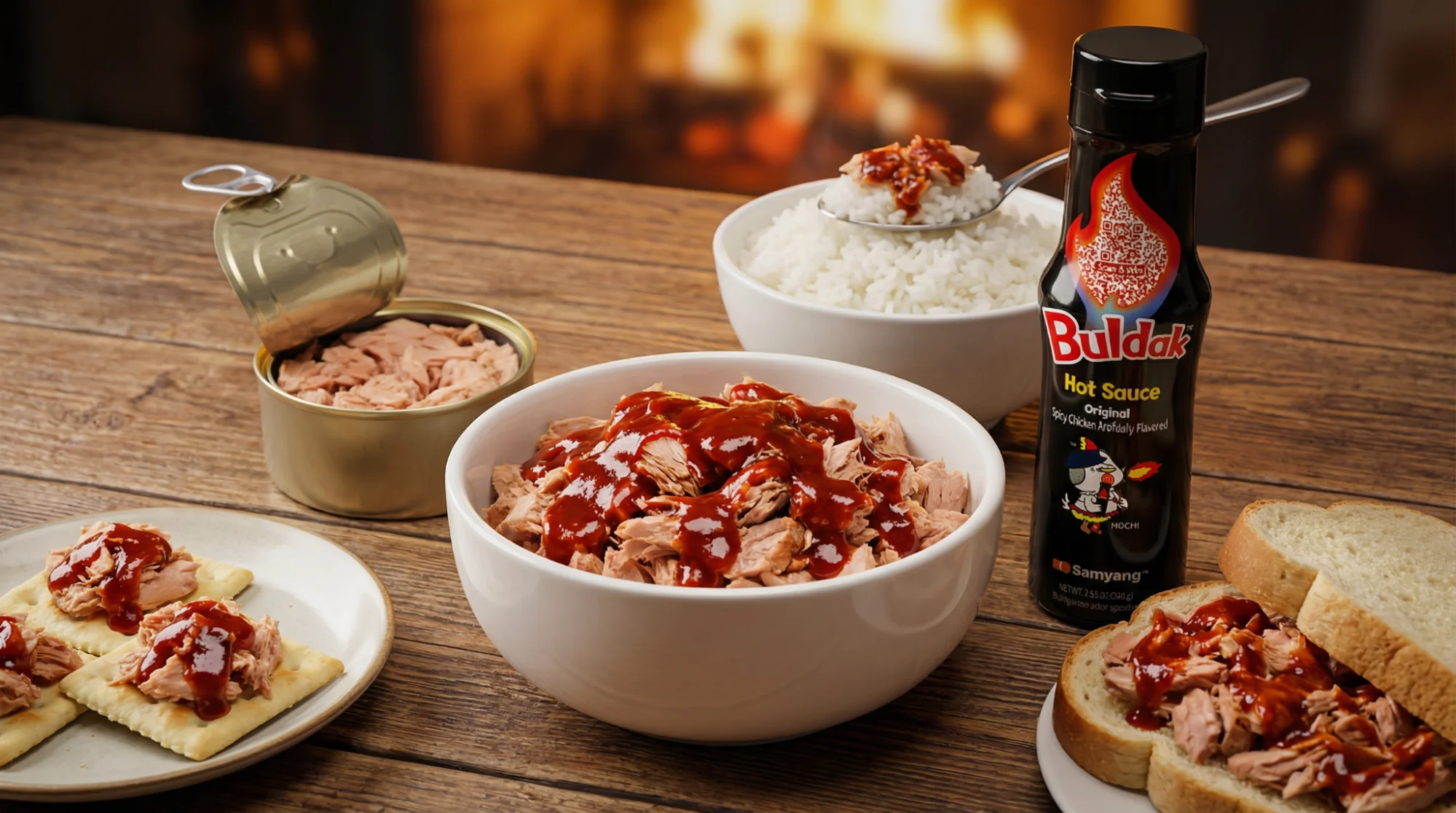 Korean marinated eggs alone can carry a whole bowl of rice. But add one more side dish and your table levels up fast. Want to try another buldak sauce creation? Go for Buldak tuna. Use canned tuna, mix in the sauce, and you're done. The mayo and tuna fat mellow out the spice, so it's easy to eat. Once your spicy korean marinated eggs are ready, pair them with Buldak tuna and seaweed. That's a whole K-dining spread right there!
Ingredients (Serves 2)
1 can of tuna (drain some oil)
1 Tbsp Buldak sauce (adjust to taste)
2 Tbsp mayo
1/2 Tbsp gochujang (optional)
1/2 Tbsp sugar or corn syrup
1/2 Tbsp minced garlic
Scallions or red pepper (optional)
A dash of sesame oil and sesame seeds
How to Make It — Method 1 (Stir-Fry)
Drain some oil from the tuna can. Keep a little — it helps with frying and adds flavor.
Toss the tuna, Buldak sauce, and sugar into a pan. Stir-fry on medium heat.
Once the moisture cooks off, move it to a bowl. Let it cool, then mix in mayo and sesame oil.
Top with scallions and sesame seeds. A drizzle of sesame oil makes it look even better.
How to Make It — Method 2 (No-Cook Mix)
Drain most of the oil from the tuna.
In a bowl, mix the tuna with Buldak sauce, mayo, sugar, and garlic.
Top with scallions, sesame seeds, and a drizzle of sesame oil.
The no-cook method is the fastest. Just toss everything in a bowl and mix. Want deeper flavor? Stir-fry first, then add mayo after it cools down. Don't add mayo while the tuna is still hot — it can separate and turn greasy.
Pro Tips
The key ratio is Buldak sauce to mayo at 1:2 or 1:3. The mayo tames the heat while adding a rich, creamy taste. It's spicier and sweeter than store-bought chili tuna — with a smoother, richer taste.
3) More Banchan Ideas with Buldak Sauce
Buldak Potato Stir-Fry
Potato stir-fry is a classic Korean side dish. It's usually mild — just salt or soy sauce. But add Buldak sauce and it becomes a whole new dish. The starch in the potato softens the spice, so it's easy to eat. Add some bacon bits or a slice of cheddar at the end for an awesome snack.
Buldak Sausage Veggie Stir-Fry
This dish — called "ssoya" in Korean slang — is a sweet and tangy stir-fry with ketchup. Kids and adults both love it. Add a little buldak sauce and the flavor jumps to the next level. The tang of ketchup balances the heat. The chicken flavor in Buldak sauce brings out the meaty taste of the sausage. Add a touch of mustard and you've got a classic Korean bar snack.
Buldak Fish Cake Stir-Fry
Fish cake stir-fry is quick, cheap, and loved in Korean homes. With Buldak sauce, it tastes like picking out the best fish cake pieces from a pot of tteokbokki. Cut the fish cakes thin or long and use them as kimbap filling. You'll end up with a dish that rivals the best Korean restaurants.
4. Top 3 Korean Side Dishes That Are Famous Worldwide
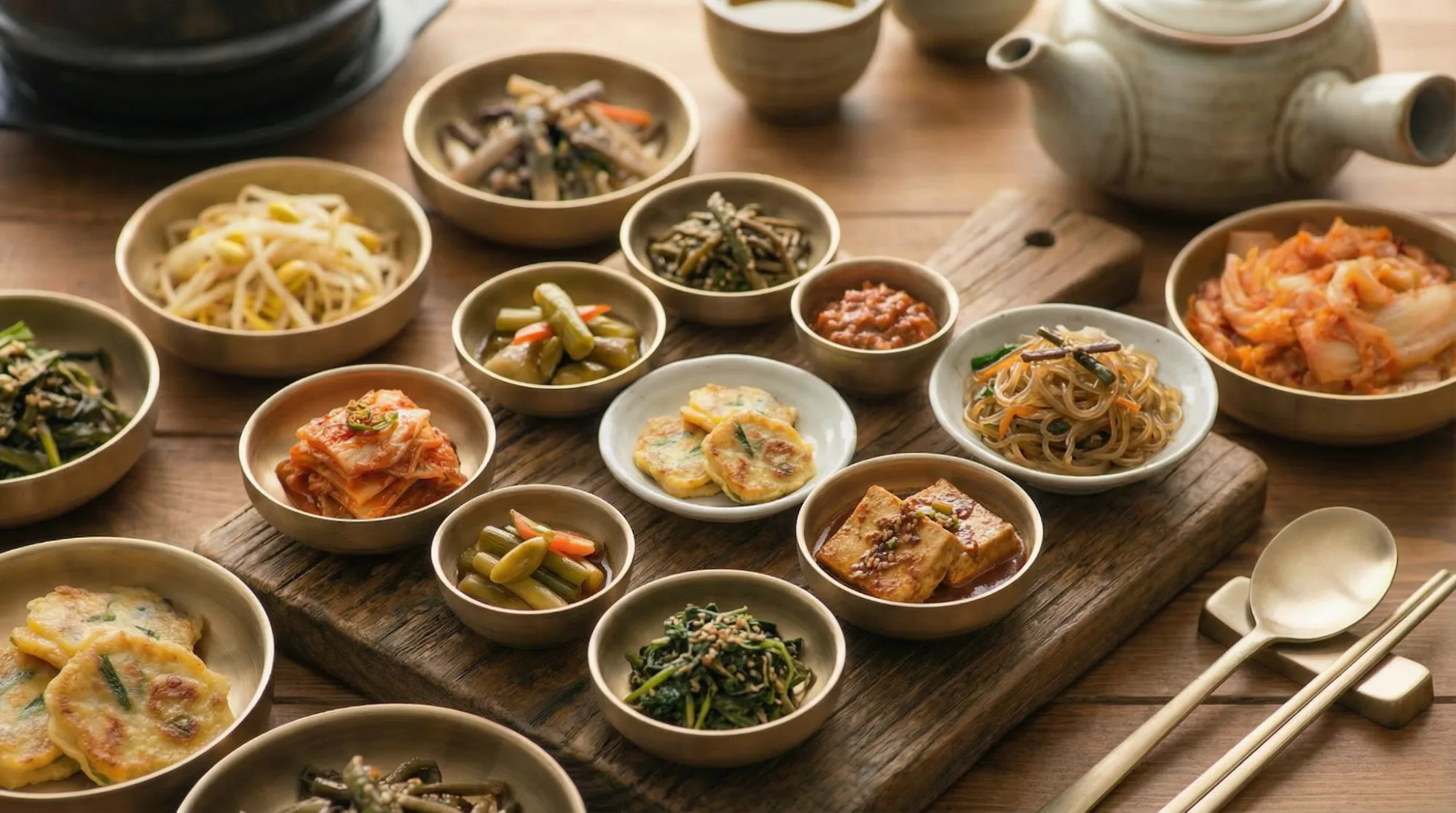
Marinated eggs are having a moment. But they're just the start of Korean banchan culture. There are plenty of Korean side dish options that keep winning over taste buds worldwide. Surprisingly, it's not the fancy dishes that go viral. It's the simple, everyday banchan menu items people never get tired of.
1) Kimchi
Kimchi is now the face of Korean food. It rides the global fermented food wave as a legit health food. Korea's kimchi exports grow every year. People eat it as a side dish, sure. But it also shows up in stews, fried rice, tacos, and burgers. It's one of the most versatile Korean side dish options out there.
After the pandemic, the world got serious about health and immunity. Kimchi is a natural fermented food packed with good bacteria. Along with yogurt, it's seen as one of the best gut-friendly foods on the planet.
2) Gim / Seaweed
In Korea, there's a saying: "With just gim, I can finish a whole bowl of rice." That's how much people love it. Seaweed used to be called "seaweed" or "black paper" in the West. Now it's a low-cal, high-protein superfood. The salty crunch won over taste buds worldwide. It became a guilt-free snack that replaced potato chips. It's also a hit in kids' lunchboxes.
Gim comes in small packs you can snack on anywhere. Wasabi, cheese, BBQ — snack brands make flavors for every palate. You don't even need rice. Just munch on them solo or pair them with drinks.
3) Gyeran-mari / Korean Rolled Omelette
Gyeran-mari is a staple Korean side dish in Korean homes. You beat eggs, cook them thin, and roll them up. Simple as that. But the soft, savory taste makes it a hit with all ages.
It tastes great with no special seasoning. Add some carrot or scallion for a pop of color. It shows up in lunchboxes all the time. Eat it with rice or wrap it in seaweed — it works both ways. It's a core banchan dish.
Overseas, it's known as "Korean rolled omelette." People compare it to Japanese tamagoyaki. But the Korean version skips the sugar and keeps it savory. It's simple, but it shows what Korean home cooking is all about.
Korean food is different when you eat it as a full spread. Rice, soup, and a lineup of side dishes — that's what makes a real Korean meal. Prepping a bunch of banchan for one bowl of rice sounds like a lot. But with something as easy as Korean marinated eggs, you can build a full table in no time.
All you need are boiled eggs and a bit of time. Add kimchi and gim to round things out. Use Buldak sauce wisely and even classic sides turn into trendy fusion dishes.
If you're a college student or a busy worker, meal-prepping these saves you from the daily "what should I eat?" struggle. Building a Korean table at home isn't hard. Start with the easiest side dish. Then tweak it to fit your taste.
Put a scoop of hot rice on a crispy gim. Top it with a spicy Korean marinated eggs slice. That's the perfect K-meal the whole world is obsessed with. Why not fill your fridge with these Korean side dish gems this weekend?
FAQ
Q. How long do Korean marinated eggs last in the fridge?
They typically last 3 to 4 days in an airtight container in the refrigerator
Q. How long should I marinate Korean marinated eggs?
At least 6 hours for decent flavor. Overnight is best for deeper taste and better texture.
Q. Can I meal prep Korean side dishes?
Yes. Many banchan, including Korean marinated eggs, tuna mix, and stir-fried vegetables, are perfect for meal prep and can be stored for several days.